
Dry Needling for Injury Rehabilitation at AccelerateNB
At AccelerateNB, we leverage dry needling—a highly targeted, minimally invasive treatment—to accelerate recovery from musculoskeletal injuries. Using ultra‑fine, solid filament needles, our expert clinicians precisely target myofascial trigger points—tight knots that often underlie pain, stiffness, and reduced range of motion. This technique can help reduce pain, improve flexibility, and enhance healing when used in conjunction with a comprehensive rehabilitation plan.
Unlike acupuncture, dry needling is rooted in Western anatomy and physiology, focusing specifically on muscular dysfunction rather than energy meridians (MDPI, SpringerLink). It’s a potent complement to physical therapy, especially when combined with therapeutic exercises, manual therapy, and electrotherapy to support comprehensive recovery.
Which injuries may benefit?
At Accelerate Sport and Spine, our protocols are guided by safe, evidence-based, compassionate care—empowering you to move pain-free and stronger, faster. Ready to take the next step toward optimized recovery? Contact our team today.
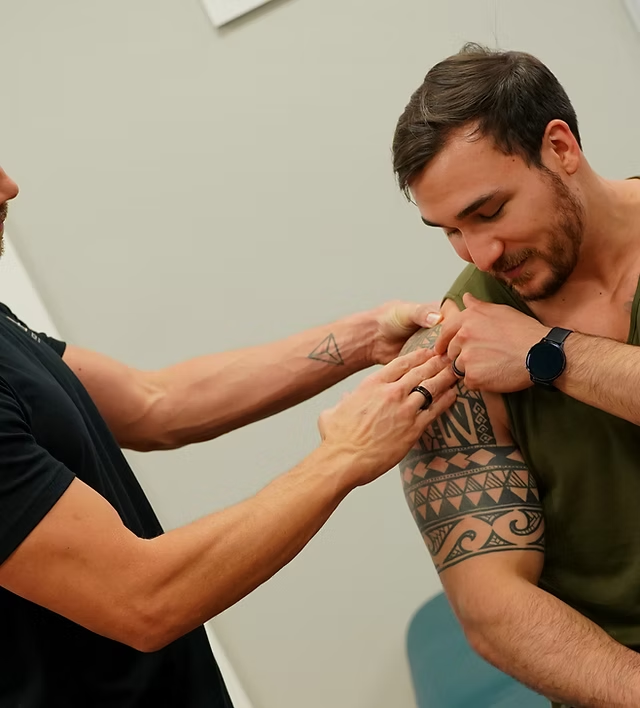
At Accelerate Sport & Spine Rehab, our skilled team employs dry needling—a precise, evidence-supported technique that targets muscular trigger points using ultra-thin, sterile filiform needles—to relieve pain, improve circulation, and accelerate recovery for injuries big and small.
Whether you’re dealing with stubborn muscle knots or post-operative stiffness, dry needling can help. It enhances blood flow, reduces muscle tension, and stimulates the body’s natural healing responses. Studies show it may deliver short-term pain relief and improved range of motion in myofascial pain syndromes (Verywell Health, Wikipedia). Ongoing advancements suggest improved outcomes when integrated into broader rehab plans.

Dry needling involves inserting a very fine, sterile needle into tight muscle areas (trigger points) to induce a twitch response, helping release tension and promote healing.
Most patients report only a brief “pinprick” or muscle twitch. Mild soreness or tenderness afterward is common but typically resolves in 24–72 hours (Verywell Health).
When performed by trained professionals using sterile techniques, dry needling is generally safe. Minor side effects like bruising and soreness are common; serious complications are rare (Verywell Health, Wikipedia).
A typical session lasts about 10–20 minutes for the needling itself, though a complete therapy appointment may run 30–60 minutes (Verywell Health).
Dry needling is used for various musculoskeletal issues, including back and neck pain, headaches, tendonitis, and joint dysfunction, especially when combined with other physical therapy methods.
(830) 743-9911